


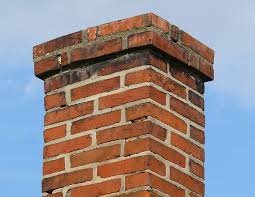
Living in Arizona, if we do own a fireplace, many of us probably don’t think about cleaning the chimney. After all, it doesn’t get much use due to the warm climate. But realtytimes.com says it’s still important to get your chimney cleaned.
All of the smoke that comes out of a chimney, creates a lot of debris and soot. By having your chimney cleaned, you’ll be getting rid of that residue which can be a fire hazard. Along with a cleaning, many companies also do a full inspection and can diagnose if there are any issues that need taking care of.
While hiring someone to clean your chimney might be desirable, you can also do it yourself. You just need to pick up some cleaning tools. realtytimes.com says it saves time and money. Yes, even time. Think about the time it take to call, make an appointment that coincides with your schedule, etc. Sometimes it’s just easier to do certain projects yourself since you can do it on your own time.
Even using a fireplace a few times a year still requires cleaning so, if you do it yourself, you can clean after each use, if you desire. There’s no rule of thumb how often you should do it.
realtytimes.com recommends buying a good set of Dryer Vent Cleaning Tools along with some chimney brushes.
But first, check to see if your chimney needs cleaning by checking for creosote. familyhandyman.com says to first make sure there’s no downdraft from the chimney. “Then, while wearing goggles and a basic disposable dust mask, take a strong flashlight and your fireplace poker and scratch the black surface above the damper (smoke chamber). If the groove you scratch in the creosote is paper thin, no cleaning is needed. If it’s 1/8 in. thick, schedule a cleaning soon. If you have 1/4 in. of creosote, do not use the fireplace again until it is cleaned—a chimney fire could occur at any time.”
familyhandyman.com says, ”the easiest creosote to remove is the feather-light dull gray, brown or black soot. The next form is a black granular accumulation, removed fairly easily with a stiff chimney brush. The third type of creosote is a road tar–like coating that is much harder to remove even with stiff chimney brushes, scrapers or power rotary whips. The final (and most deadly) is a shiny, glaze-like coating on the flue that is virtually impossible to remove.”
The website says depending on how much build-up there is, you might want to call a chimney sweep. If there’s not much of a build-up, than cleaning the chimney yourself is definitely feasible, especially if you do it on a regular basis.